



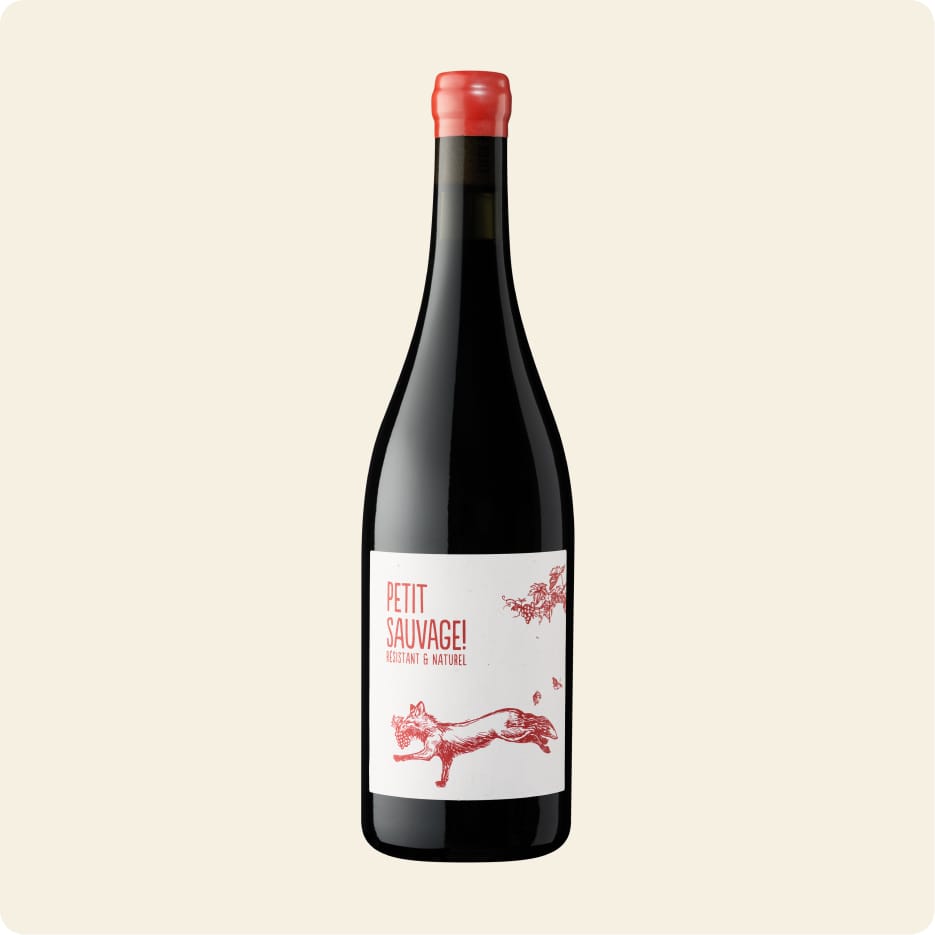
2024  0.75 cl
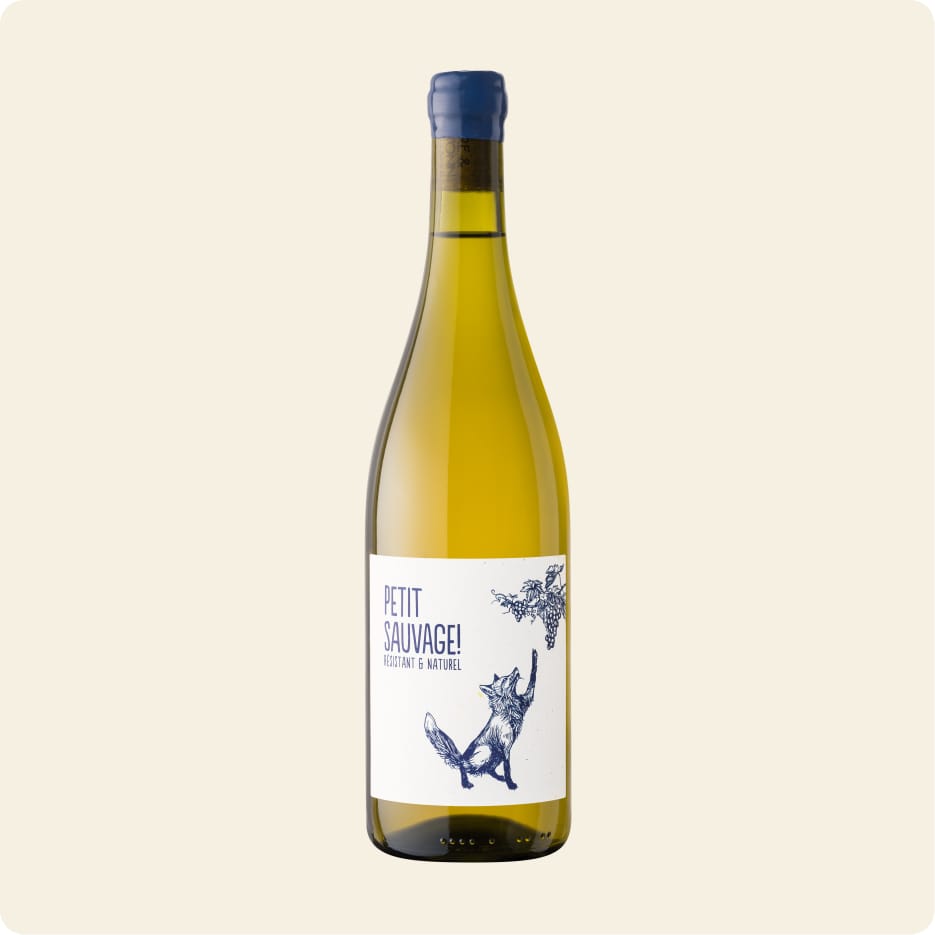
2025 0.75 cl
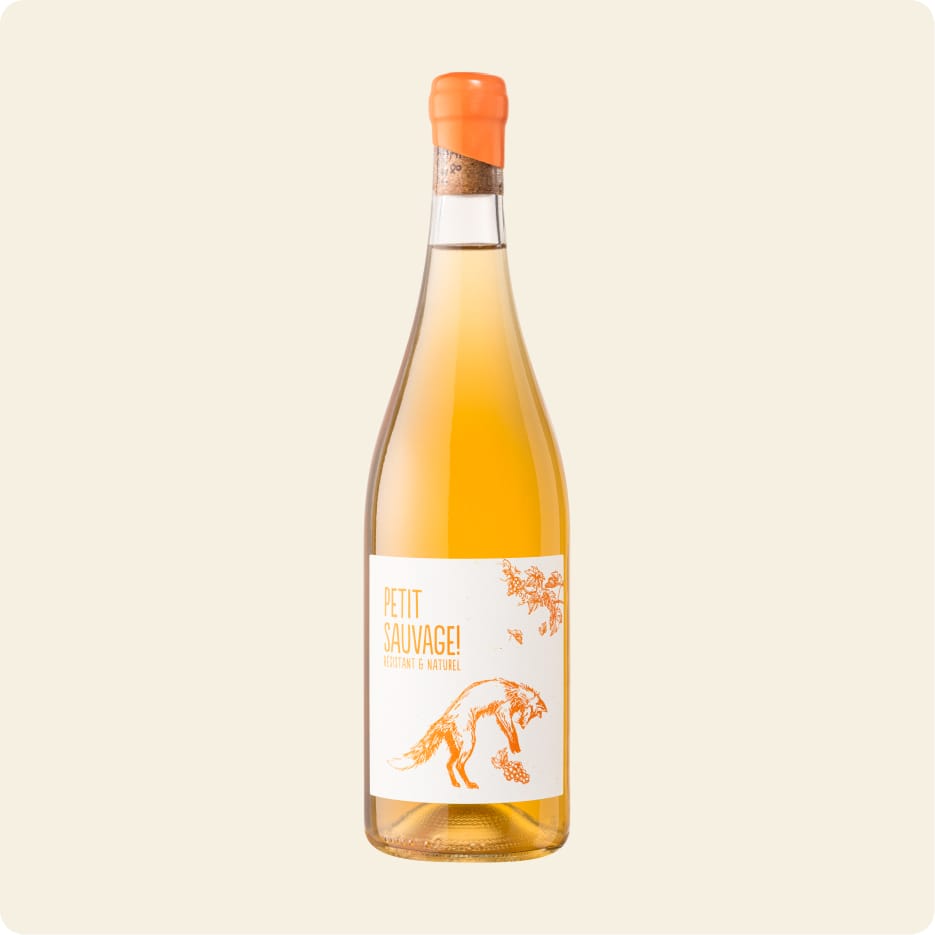
2024 0.75 cl




Our resistance fighters
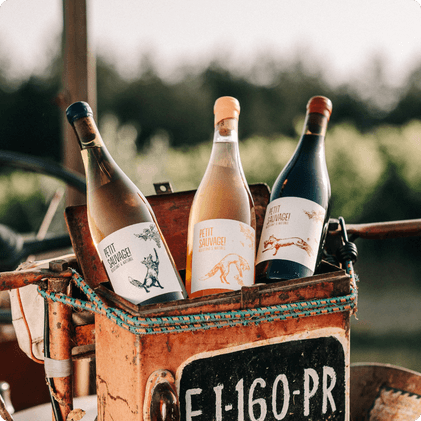
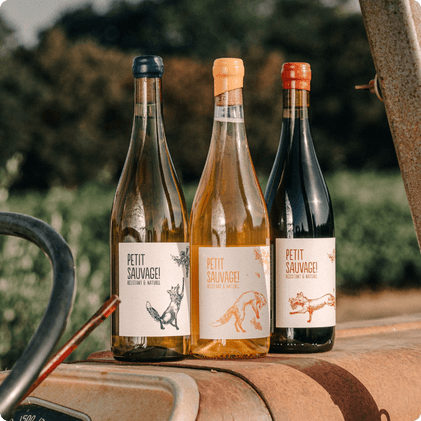
Our range of natural wines made from resistant grape varieties in three colors: red, white and orange, for those who love lively, expressive wines!
A red wine that packs a punch!
Made from Cabernet Cortis, a resistant grape variety naturally immune to powdery mildew and downy mildew, this wine is harvested when fully ripe, and vinified without destemming or crushing to preserve the fruit’s energy. A short 10-day maceration allows the grape variety’s full potential to be expressed without heaviness. Aged in concrete tanks, it retains a beautiful tension.
A structured, fragrant orange wine designed to surprise.
Souvignier Gris is vinified here with 11 days’ pellicular maceration, without destemming or crushing, to extract aromas, color and a fine tannic structure. After pressing, the wine is aged for 5 months in white oak truncated-cone vats, giving it fatness, roundness and great complexity.
A crisp, ultra-refreshing white that bursts on the palate.
Harvested at perfect ripeness, directly cold-pressed to preserve all the fruit’s radiance. Fermented with indigenous yeasts, no additions, then aged 4 months on fine lees. The result is a pure, straightforward, mineral wine with tension.
Bottling – The fermenting wine is then bottled without any sugars, inputs or sulfites (of which there is still some unburned sugar), then with the heat, alcoholic fermentation resumes in the bottle (the remaining sugar is therefore burned off) and the carbon dioxide can no longer escape, giving rise to the effervescence of Pet Nat.
Disgorging or not – When fermentation is complete, a deposit of dead yeast accumulates at the bottom of the bottle, creating a slight cloudiness (burbidity). This will either be expelled, a step known as disgorging, or left as is, contributing to the development of unique aromas and adding complexity and texture.
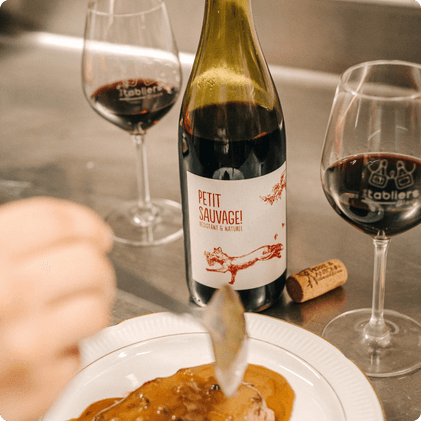
Petit Sauvage Rouge: Luscious and juicy, with aromas of blackberry, black cherry and blackcurrant. Supple tannins, lovely freshness.
Petit Sauvage Orange: Expressive and spicy, with notes of jasmine, white tea and bergamot. Full-bodied on the palate, with a silky finish.
Petit Sauvage Blanc: Crisp and mineral. Nose of green apple and white flowers, taut palate with hints of apricot and nectarine.
The wines
A resistant grape variety is a cross between a local vine with recognized oenological aptitudes and
a disease-resistant wild vine native to the Americas.
Fewer products, less water, less time spent in the vineyard… and therefore less impact on the planet.Cleaner, simpler, more resilient viticulture in the face of climate change.
This natural crossbreeding is achieved by hand pollination (no genetic manipulation here!). Just as Syrah is born of a marriage between two ancient grape varieties.
The result of a natural cross between a European vine (well known for its oenological qualities) and a wild American vine, naturally immune to the main vine diseases: powdery mildew and downy mildew.
La Faq
A resistant grape variety is a natural cross resulting from manual pollination between a European vine (Vitis Vinifera) with recognized oenological aptitudes and a wild American vine (Vitis Rupestris) resistant to the diseases powdery mildew and downy mildew. A kind of super-organic!
No. All our wines are vinified with indigenous yeasts, naturally present in the grapes. This is easy to do with our resistant grape varieties, as they are rarely treated and their natural yeasts are thus preserved.
So we don’t need to add any inputs. The natural acidity of our resistant grape varieties, combined with meticulous cellar management, means we can avoid adding sulfites to our wines.
Organic wine complies with precise viticultural specifications, but still allows certain inputs during vinification.
Natural wine, on the other hand, goes one step further: it is organic and no additives are used during vinification.
Yes, 100%. We use:
The lightest bottle on the market (370 g), made less than 80 km from the vineyard.
French cork, from forests in Roussillon.
Natural wax, instead of aluminum capsules.
Labels made from recycled fibers (sugar cane, hemp, flax).
Even our cardboard boxes are recycled!